


Knowledge
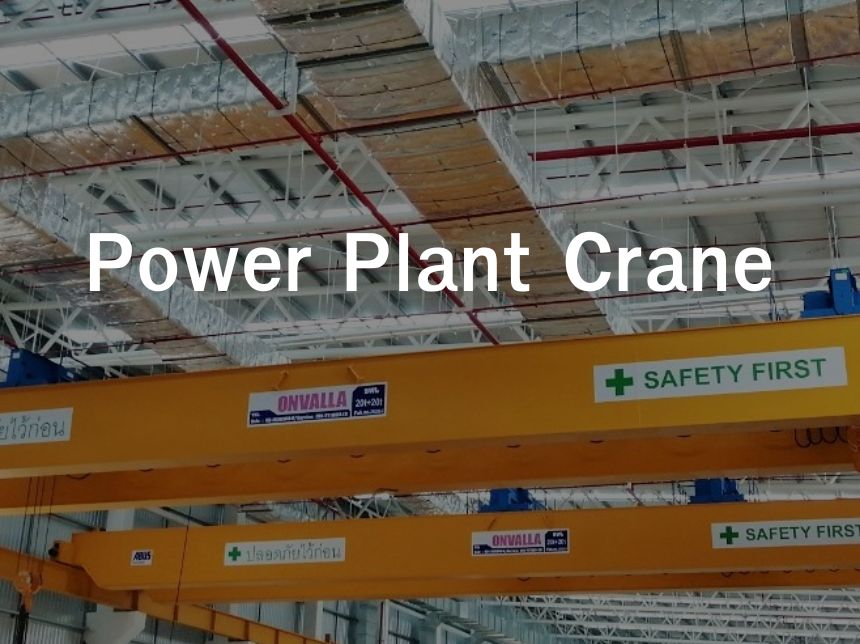
What Standards Are Required for Power Plant Cranes?
What Standards Are Required for Power Plant Cranes?
Cranes used in power plants must meet significantly higher standards than general industrial cranes. Key requirements include:
- Duty Class M7–M8 according to FEM 1.001
- Fail-safe double brake system
- High-temperature resistance
- Motor insulation Class F or H
- Third-party certification (TÜV, Bureau Veritas, Lloyd’s, DNV)
- Complete documentation: Design Certificate, Commissioning Test
- Annual inspection by certified independent engineers
Why Do Power Plant Cranes Require Special Standards?
Power plants present unique operating conditions that demand superior crane design:
1. Extremely Heavy and Complex Lifting
Handling turbines, generators, and transformers weighing hundreds of tons in confined spaces.
Zero tolerance for failure.
2. Harsh Environmental Conditions
- Turbine hall temperatures: 50–80°C
- High humidity and steam near boilers
- Exposure to coal dust, ash, and chemicals
- Continuous vibration from major equipment
3. High Criticality
Cranes are used during planned maintenance outages (every 2–5 years).
They must perform 100% reliably every time.
4. Contractual & Regulatory Requirements
Large power plant projects are tied to international standards and require third-party certification.
Key Standards for Power Plant Cranes
FEM 1.001 — Duty Class (M7–M8)
Duty class is determined by:
- Spectrum Class (S0–S4): Load spectrum relative to SWL
- Utilization Class (U0–U9): Number of operating cycles
| Duty Class | Application |
|---|---|
| M3–M4 | Light duty (maintenance) |
| M5–M6 | General industry |
| M7 | Power plants, steel mills, shipyards |
| M8 | Continuous severe duty |
➡ Power plant cranes must be M7 or higher
CMAA (USA Standard) — Class D–F
- Class D (Heavy Duty) ≈ FEM M6–M7
- Class E (Severe Service) ≈ FEM M7–M8
- Class F (Continuous Severe Service)
IEC 60034 — Motor Standards
Motors must meet:
- Class F insulation (up to 155°C)
- Class H insulation (up to 180°C for extreme heat)
- IP55 or higher (dust and water protection)
- ATEX certification (for explosive environments)
EN 13001 / ISO 4301 — Crane Design
Structural design must consider:
- Fatigue life
- Dynamic load factors
- Wind load (for outdoor cranes)
- Seismic resistance (if applicable)
Brake System Requirements
Mandatory Double Brake System
Power plant cranes must have two independent braking systems:
1. Primary Brake (Service Brake)
- Operates during normal stopping (normally-on)
- Electromagnetic or hydraulic
- Must hold 100% rated load
2. Secondary Brake (Safety Brake)
- Activates automatically if primary brake fails
- Or during overspeed conditions
- Must also hold 100% rated load
Brake Testing Requirements
- 100% load test — annually
- 125% load test — before commissioning and after major overhaul
- Record brake torque and stopping time
Inspection & Certification Process
1. Design Review (Pre-production)
- Submit calculations and drawings for third-party review
- Obtain Design Certificate (TÜV, BV, Lloyd’s, DNV)
2. Factory Acceptance Test (FAT)
- No-load, 100%, and 125% load tests
- Check dimensions, clearances, and electrical systems
3. Site Acceptance Test (SAT)
- Conducted after installation
- Load testing and safety system verification
4. Commissioning Report
5. Annual Inspection
- Performed by certified independent engineers
- Includes load test and safety checks
- Issuance of Inspection Certificate
Required Documentation
The following documents must be delivered with the crane:
- Design Calculation Report
- As-built Drawings
- Electrical Wiring Diagrams
- Operation & Maintenance Manual (Thai & English)
- Spare Parts List (with part numbers and suppliers)
- Material Certificates
- Weld Inspection Reports
- Factory Test Report
- Commissioning Report
- Third-party Design Certificate
Common Mistakes in Procuring Power Plant Cranes
1. Selecting Too Low Duty Class
M5 may seem sufficient, but M7–M8 is the minimum requirement for reliability.
2. Unclear TOR (Terms of Reference)
Leads to low-standard crane proposals that are unsuitable.
3. No Third-Party Inspection
Often removed to reduce cost, but it is critical for quality assurance.
4. No Spare Parts in Contract
Leads to long downtime when failures occur.
Frequently Asked Questions (FAQ)
Q: How is a power plant crane different from a standard overhead crane?
A: The structure is similar, but power plant cranes differ in duty class (M7–M8 vs M3–M5), brake redundancy, environmental resistance, and certification requirements.
Q: What do TÜV or Bureau Veritas inspect?
A: They verify design calculations, witness load testing, and certify compliance with applicable standards.
Q: Does ONVALLA have power plant experience?
A: Yes. ONVALLA has experience in designing and installing cranes for power plants, with expertise in FEM standards and third-party certification.
Q: What is the cost of third-party inspection?
A: Typically 2–5% of crane value, which is highly cost-effective compared to the risks mitigated.
Q: Is annual inspection required by Thai law?
A: Yes. Cranes with capacity ≥ 1 ton must be inspected annually by a licensed engineer.