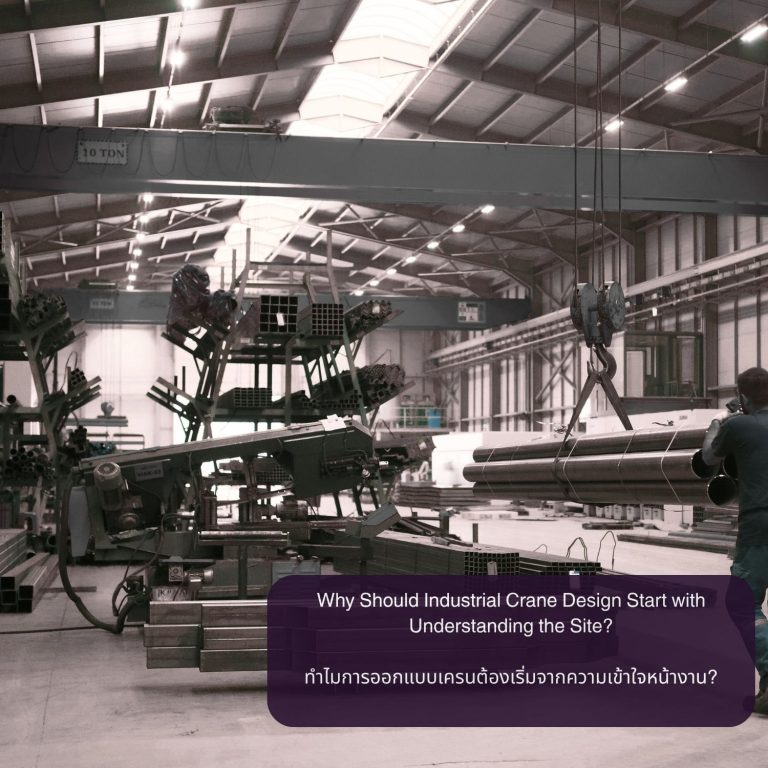
Effective industrial crane design should begin with a thorough understanding of the actual site, rather than selecting equipment based solely on catalog specifications. Every factory has different building structures, production processes, material handling requirements, working areas, and operating conditions.
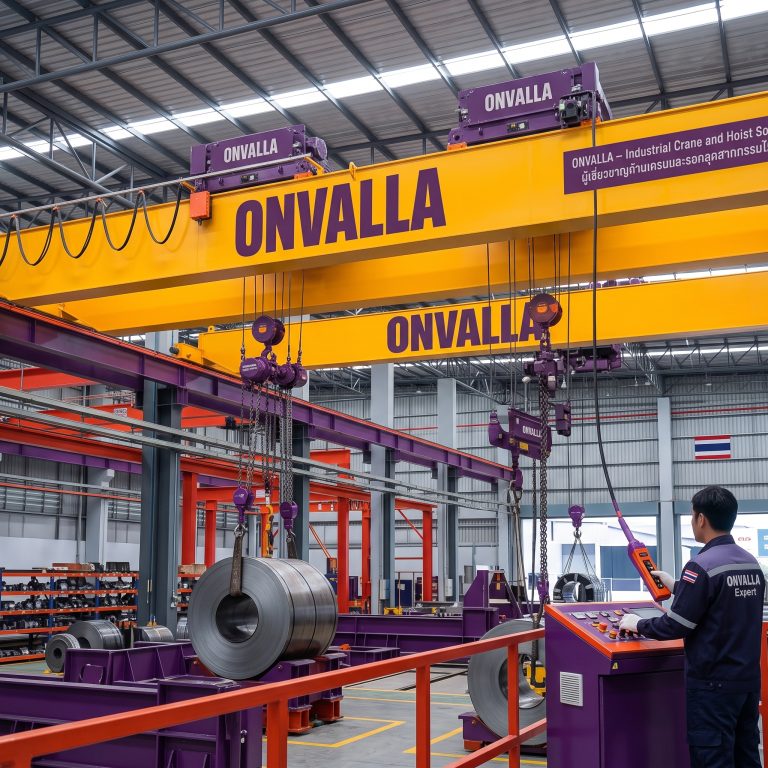
For ONVALLA, the design of an Industrial Crane and Hoist Solution starts with understanding the customer’s application and site conditions before determining the appropriate crane type, lifting capacity, dimensions, and equipment specifications.
Why Is a Site Survey Important Before Designing a Crane?
A site survey allows the engineering team to understand the actual working environment and design a crane system that fits the factory’s space, structure, and production process.
Key factors include:
- Building height and available installation space
- Crane span and operating area
- Existing building structure and structural limitations
- Load capacity and type of material being lifted
- Material movement and handling routes
- Lifting frequency and duty cycle
- Hoisting and travelling speeds
- Temperature, dust, humidity, and other environmental conditions
- Equipment accessibility for inspection and maintenance
- Workplace and operational safety requirements
These factors directly influence the selection of the crane type, hoist capacity, operating speed, and other components of the lifting system.
What Does ONVALLA Consider When Designing an Industrial Crane?
ONVALLA considers both engineering requirements and actual operating conditions when developing a Crane Solution for each project.
The engineering team evaluates factors such as installation space, building structure, load characteristics, production processes, and operator workflow to ensure that the crane system is suitable for the customer’s application.
A site survey can also identify practical limitations that may not be visible in drawings or technical specifications, such as restricted lifting areas, limited headroom, or material travel paths that could interfere with the production process.
What Are the Risks of Choosing a Crane Based Only on Specifications?
Selecting a crane based only on catalog specifications can result in equipment that technically meets the stated specifications but does not perform effectively in the actual working environment.
Potential issues may include:
- The crane cannot reach the required working area
- Insufficient lifting height
- Hoisting or travelling speed does not match the production process
- The crane is not suitable for the required duty cycle
- Existing building structures cannot adequately support the system
- Limited access for inspection and maintenance
- Additional modifications required after installation
For this reason, crane selection should consider Application + Site Conditions + Engineering Requirements together.
How Can a Site Survey Reduce Long-term Problems?
Conducting a detailed site survey at the beginning of a project helps reduce the risk of designing a system that does not match the actual application and can minimize costly modifications after installation.
When engineers understand site limitations before the design stage, these factors can be incorporated into the crane system from the beginning. This supports smoother installation and helps ensure that the completed system performs according to the project’s intended requirements.
Is the Crane with the Highest Specifications Always the Best Choice?
Not necessarily. The best crane is the one with specifications and operating characteristics that are appropriate for the actual application.
Selecting equipment with significantly higher capabilities than required does not always provide better value. It may increase the initial investment without delivering meaningful benefits to the production process.
ONVALLA therefore focuses on balancing Safety, Performance, Reliability, and Cost-effectiveness when developing crane solutions for industrial customers.
How Does ONVALLA Approach Crane Design?
ONVALLA views crane design as an engineering solution that should begin with understanding the actual site and application, rather than simply selecting a product based on specifications.
From site surveys and workflow analysis to evaluating building limitations and selecting the appropriate Crane and Hoist, each stage is focused on developing a lifting system that is practical, safe, reliable, and suitable for the factory’s long-term operation.
For ONVALLA, the best crane is not necessarily the crane with the highest specifications, but the crane designed to perform effectively in the actual working environment.