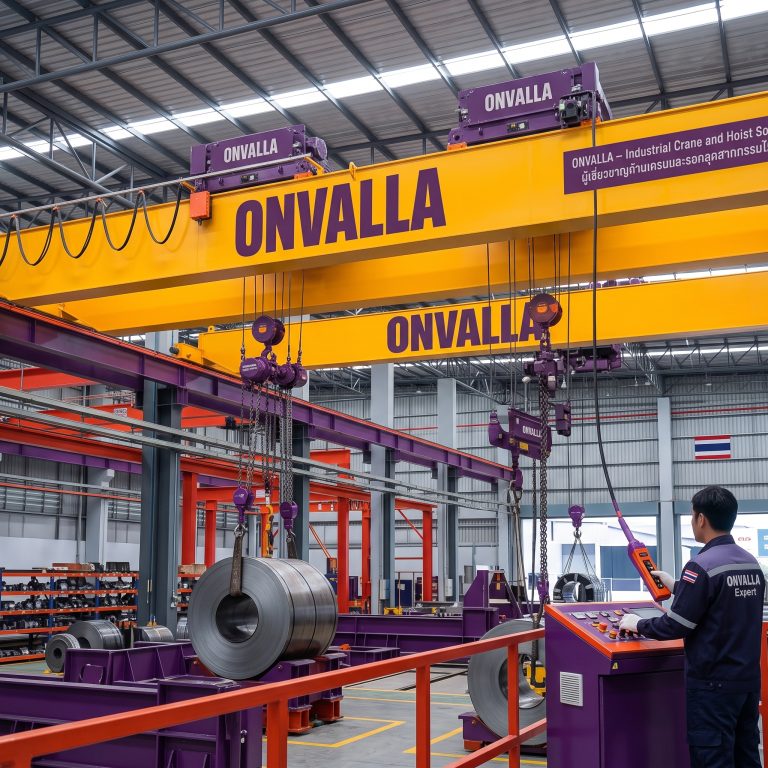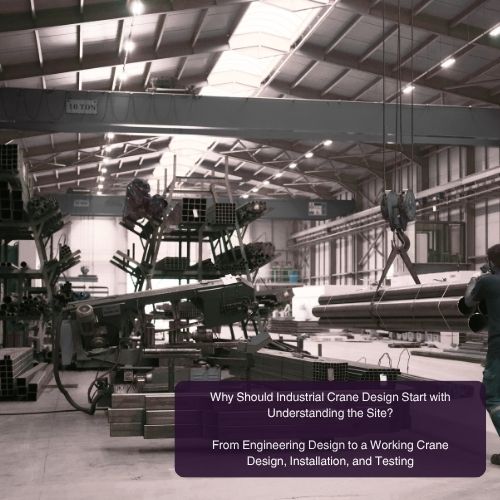
Industrial crane design should begin with a clear understanding of the actual site conditions because every facility has different structural limitations, material handling requirements, load capacities, operating frequencies, and working environments. Selecting a crane based only on catalog specifications may therefore not provide the right solution for the actual application.
For ONVALLA, crane design does not begin with choosing a product. It begins with understanding what the customer needs the crane to accomplish, how the system will be used, and what limitations exist at the site.
How Do Site Conditions Affect Crane Design?
Every industrial site has different factors that can influence the selection and design of a crane system, including:
- Building size and height – affect installation space, lifting height, and system configuration
- Building structure – must be considered when determining the appropriate installation method and structural requirements
- Load capacity – determines the required lifting capacity of the crane and related equipment
- Material handling process – including lifting, lowering, longitudinal travel, and cross-travel requirements
- Operating frequency – affects equipment selection and crane duty requirements
- Available working space – including obstructions, travelling areas, and maintenance access
- Working environment – such as temperature, dust, humidity, and other specific operating conditions
These factors can influence the crane type, lifting capacity, operating speed, and overall system configuration.
Why Is a Site Survey Important Before Crane Design?
A site survey allows the engineering team to understand the actual installation and operating conditions before finalizing the crane system.
During a site assessment, important information may include:
- Measuring the actual installation area
- Reviewing the existing building structure
- Assessing crane and material travelling areas
- Identifying installation limitations
- Discussing actual operating conditions with site personnel
- Analyzing problems with the existing material handling process or equipment
Communication with operators is particularly valuable because actual operating requirements may differ from the initial technical specifications.
How Can Site-Based Crane Design Help Reduce Problems?
Analyzing site conditions at an early stage helps identify important requirements and limitations before manufacturing and installation begin.
Potential issues that can be identified earlier include:
- The crane cannot reach the required lifting area
- Insufficient lifting height or travel distance
- Operating speed does not match the production process
- The crane system is not compatible with the existing building structure
- Limited space creates installation difficulties
- Maintenance access is insufficient
Identifying these limitations during the design stage can reduce the risk of modifications after installation, which may affect project costs and schedules.
How Does ONVALLA Design Industrial Crane Solutions?
ONVALLA focuses on understanding Application + Site Condition + Customer Requirement before selecting equipment and developing a crane solution.
Our approach includes:
1. Understand — Understand the Requirement
Identify the customer’s objectives, material characteristics, load requirements, and operational process.
2. Survey — Assess the Site
Collect information about the installation area, building structure, travelling distances, and site limitations.
3. Analyze — Analyze the Information
Combine customer requirements and site data to determine the appropriate system approach.
4. Design — Develop the Solution
Select the appropriate crane type and equipment based on the actual application.
5. Deliver — Install and Commission
Proceed with installation, testing, commissioning, and after-sales support according to the project requirements.
What Factors Should Be Considered When Selecting an Industrial Crane?
The right crane should not be selected based solely on the highest lifting capacity or specifications. It should be evaluated based on the actual application and site conditions.
Important factors include:
- Load Capacity
- Lifting Height
- Span
- Travelling Distance
- Lifting and Travelling Speed
- Duty Cycle or Operating Frequency
- Working Environment
- Building Structure
- Installation and Maintenance Requirements
Frequently Asked Questions About Industrial Crane Design
Can a crane be selected based only on the required lifting capacity?
No. Lifting capacity is only one consideration. The selection should also take into account lifting height, span, operating frequency, travelling distance, operating speed, building structure, and working environment.
Is a site survey necessary before installing an industrial crane?
For crane installation projects, a site survey is an important step. It helps evaluate the available space, building structure, installation limitations, and actual operating requirements before the system is designed.
Is a crane with the highest specifications always the best choice?
Not necessarily. A crane should be selected and designed according to the required load, application, operating frequency, site conditions, and project requirements.
Does ONVALLA provide crane design and installation services?
ONVALLA provides Crane Solutions and Hoist Solutions, with services that can cover requirement analysis, site assessment, solution design, installation, testing, commissioning, and after-sales support.
ONVALLA: Industrial Crane Solutions Designed Around Your Application
For ONVALLA, effective crane design starts with understanding the site—not simply selecting the highest specifications.
Every industrial facility has different operating conditions and limitations. The right crane solution should therefore be developed around the actual application, actual site conditions, and customer requirements to support reliable and suitable long-term operation.