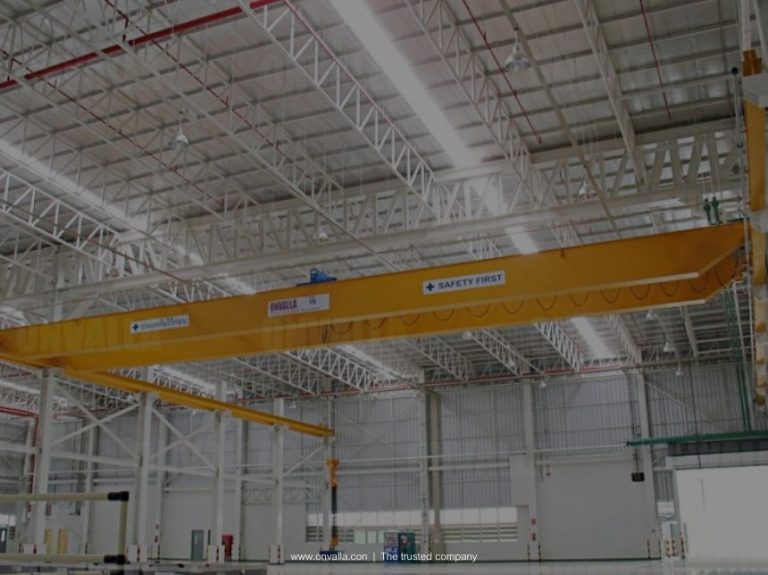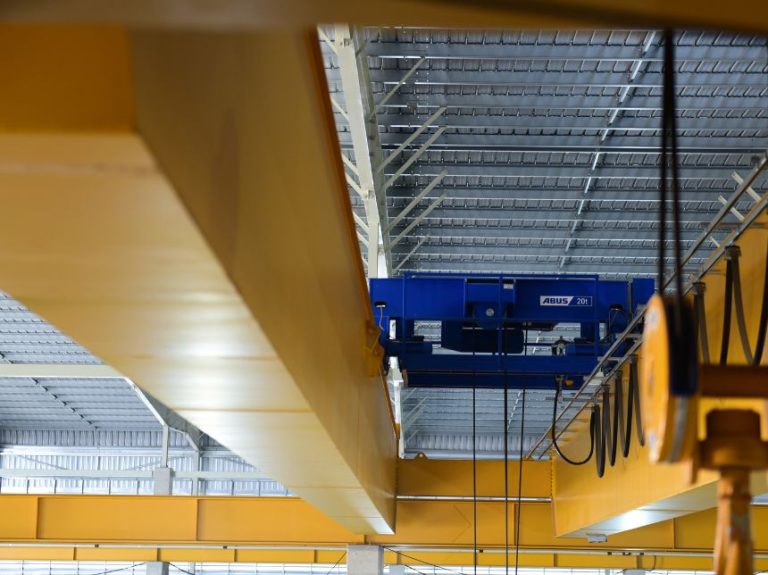
In Thailand, employers must train every employee who works as a crane operator, signaller, rigger or crane-use supervisor before they start the job, and must provide refresher training every two years or after a serious crane accident at the workplace. For overhead cranes, the full course for these “4 roles” is 18 hours; for mobile cranes it is 24 hours; refresher courses are at least 3 hours.
Why Is Crane Training Required by Law?
Hoists, cranes and other lifting machines are high-risk controlled machinery. Crane accidents still happen, causing damage to property and loss of life, and one cause is incorrect, unsafe use by people who have not been trained.
The Ministry of Labour therefore issued the Ministerial Regulation on safety, occupational health and working environment for machinery, cranes and boilers (B.E. 2552 / 2009). The Department of Labour Protection and Welfare followed with a notification (B.E. 2554 / 2011) setting the rules and methods for training crane operators, signallers, riggers and crane-use supervisors, and for refresher training.
What Are the “4 Roles” in Crane Training?
| Role | Duty |
|---|---|
| Crane operator | Operates the crane to perform the required work |
| Signaller | Communicates with the operator by hand signals or other means |
| Rigger | Ties, binds or hooks the load to be lifted |
| Crane-use supervisor | Directs the work, instructs the operator and decides on the load to be lifted |
Course Hours Required
| Course | Full course | Refresher |
|---|---|---|
| Overhead crane users (4 roles) | 18 hours | At least 3 hours |
| Mobile crane users, including truck- and vessel-mounted cranes (4 roles) | 24 hours | At least 3 hours |
What Does ONVALLA’s Crane Training Cover?
ONVALLA’s experienced team runs practical, standards-based training, from basic care and correct operation to working to safety standards, and assesses each participant’s skills at the end.
| Module | Content | Time |
|---|---|---|
| 1. Theory and law | Crane types and components, Thai crane safety law, duty cycle, SWL, rigging angles | 2–3 hours |
| 2. Pre-use inspection | Checking hook, rope, sling and controls; recording results; out-of-service criteria | 1–2 hours |
| 3. Rigging techniques | Choosing slings, effect of rigging angles on SWL, rigging methods, centre of gravity | 2–3 hours |
| 4. Communication | Standard hand signals, radio and sound signals, rigger and operator roles | 1 hour |
| 5. Hands-on practice | Practice on real cranes in a safe setting, inspection test, simulated lifts | Half to one day |
Outcomes: each participant receives a training certificate with photo, and the company receives training records for audits.
Frequently Asked Questions
How often must crane training be repeated?
Under the 2011 notification, refresher training is required every two years, or when a serious crane accident occurs at the workplace. Retraining is also good practice when staff move to a different crane type.
Who must be trained?
Everyone involved in lifting: crane operators, signallers, riggers and crane-use supervisors.
Can ONVALLA train at our factory?
Yes. ONVALLA runs in-house training using the factory’s own cranes, so staff practise on the equipment they actually use. A class of 8–15 people is recommended so everyone gets enough hands-on practice.
Can the certificates be used for audits?
Yes. ONVALLA certificates list the course content, training date and competencies tested, and can support ISO 45001 and customer audits.
Before training, read the overhead crane safety rules. To book a course, contact ONVALLA or see our after-sale service.