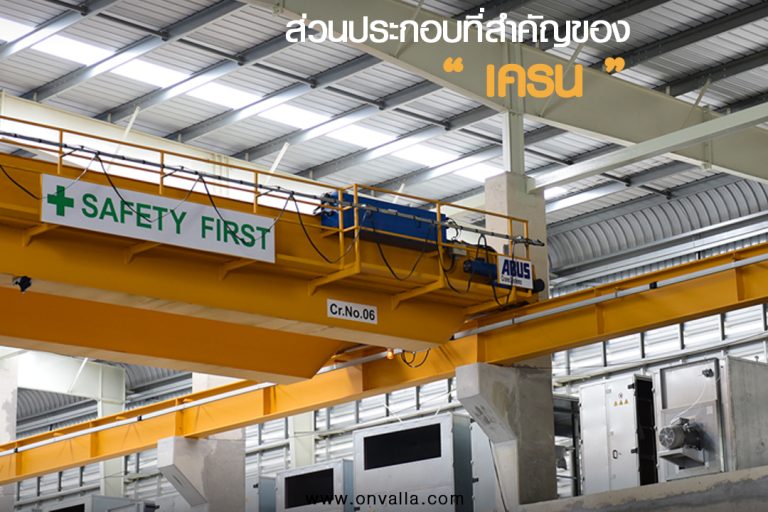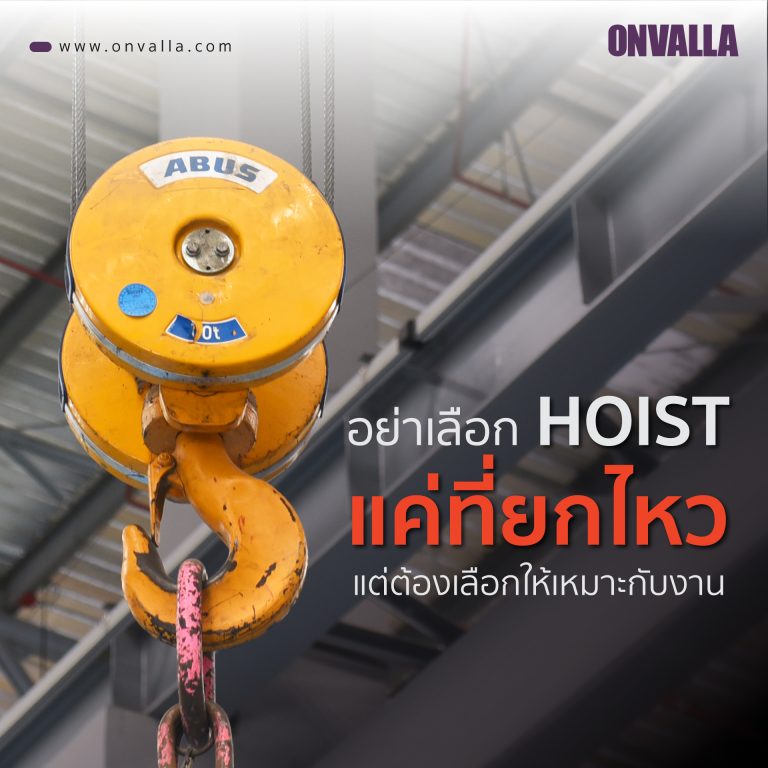
Factory cranes fall into four main families: overhead cranes, which run on rails fixed to the building structure; gantry cranes, which stand on their own legs and run on rails at floor level; jib cranes, for lifting within a limited radius; and wall-travelling cranes, which run along a wall to save floor space. The right choice depends on the application, the building, the available space and each customer’s requirements.
A crane is a machine that lifts heavy objects vertically and moves them while suspended, either horizontally or around a set path. The main girder carries the lifting load, so it must be designed to be strong and safe.
What Types of Factory Cranes Are There?
Based on ONVALLA’s crane design data, the main types and their typical working ranges are:
| Crane type | Typical capacity | Typical span / reach | Best suited to |
|---|---|---|---|
| Single-girder overhead crane | 0.5–20 t | 4–40 m | Light to medium loads in factories of all sizes |
| Double-girder overhead crane | 2–500 t | 10–50 m | Heavy industry: steel coil stores, automotive parts plants, power plants |
| Underhung overhead crane | Single or double girder | Full building width | Buildings that need the full floor area, e.g. large aircraft hangars |
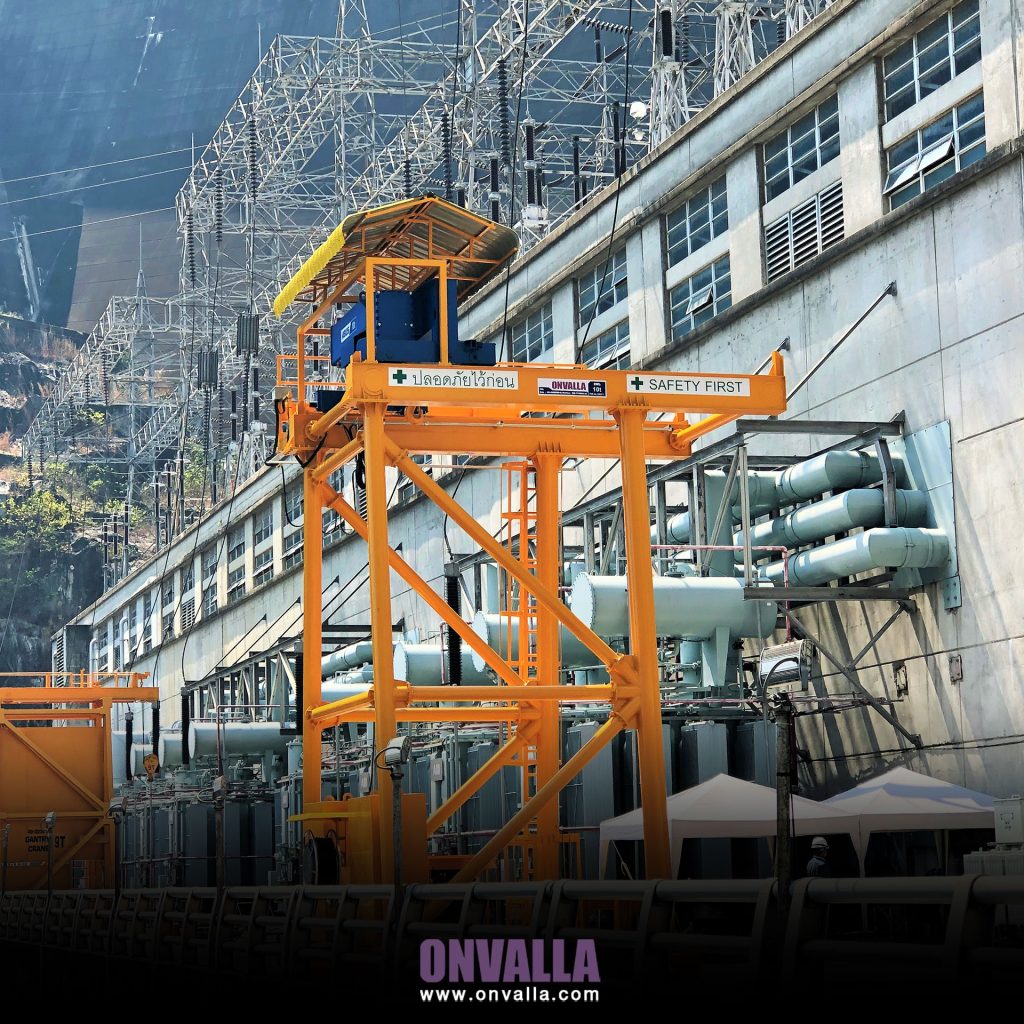
| Single-girder gantry crane | 1–20 t | 6–40 m | Outdoor yards or buildings without crane columns |
| Double-girder gantry crane | 2–500 t | 10–50 m | Heavier loads outdoors or without crane columns |
| Single-girder semi-gantry crane | 1–20 t | 6–40 m | One rail on the building columns, one at floor level; allows two crane levels |
| Double-girder semi-gantry crane | 2–500 t | 10–50 m | As above, for heavier loads and wider areas |
| Pillar jib crane | 1–20 t | Arm up to 20 m | Lifting around a fixed point |
| Wall jib crane | Uses a building column | Radius of the arm | Lifting around a column without a floor-mounted pillar |
| Wall-travelling crane | — | Along the full wall | Lifting along the side of the building |
| Monorail | 0.5–20 t | Straight or curved track | Fixed routes along a production process |
Overhead Crane vs. Gantry Crane: What Is the Difference?
Both lift heavy loads, but their structure and use are clearly different.
| Feature | Overhead crane | Gantry crane |
|---|---|---|
| Structure | Mounted on beams or the building structure | Has its own legs and runs at floor level |
| Working area | Mainly indoors | Indoors and outdoors |
| Space | Keeps the floor below clear, because it runs overhead | Easier to install where there is no supporting structure |
| Typical use | Continuous heavy work in production lines | Moving heavy loads across wide, open areas |
Which Should You Choose?
- Choose an overhead crane if your factory already has a strong structure and you want to keep the floor area as clear as possible.
- Choose a gantry crane if you need to work outdoors, or your building was not designed to carry crane loads from above.
- Consider a semi-gantry crane if one side of the area has building columns and the other does not.
Other Specialised Types
- Jib cranes suit lifting in a specific area within the radius of the arm. The swing angle is limited by walls on site.
- Wall-travelling cranes have three legs and six wheels running on two rail levels fixed to the wall columns, with a cantilevered girder. They lift along the side wall like a semi-gantry crane, but more conveniently.
- Monorails carry a hoist along a single track that can be straight or curved to follow the process. The hoist moves forwards, backwards, up and down.
Frequently Asked Questions
What capacity range does a single-girder overhead crane cover?
Typically 0.5–20 tons, with spans of about 4–40 metres. Heavier loads usually call for a double-girder crane (2–500 tons).
Can a gantry crane be used indoors?
Yes. Gantry cranes are used both outdoors and indoors under a factory roof, especially where the building has no columns prepared for an overhead crane.
What control options are available?
For single-girder overhead cranes, customers can choose a double-speed system (slow and fast speeds in the same direction) or an inverter system for smoother movement.
ONVALLA’s engineering team designs cranes to suit each customer’s use. See overhead cranes, gantry cranes, the crane range, or contact us for advice.