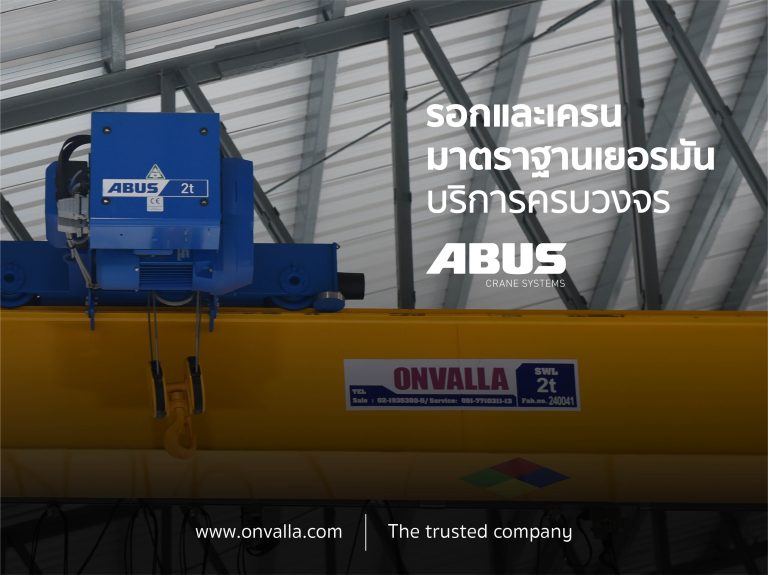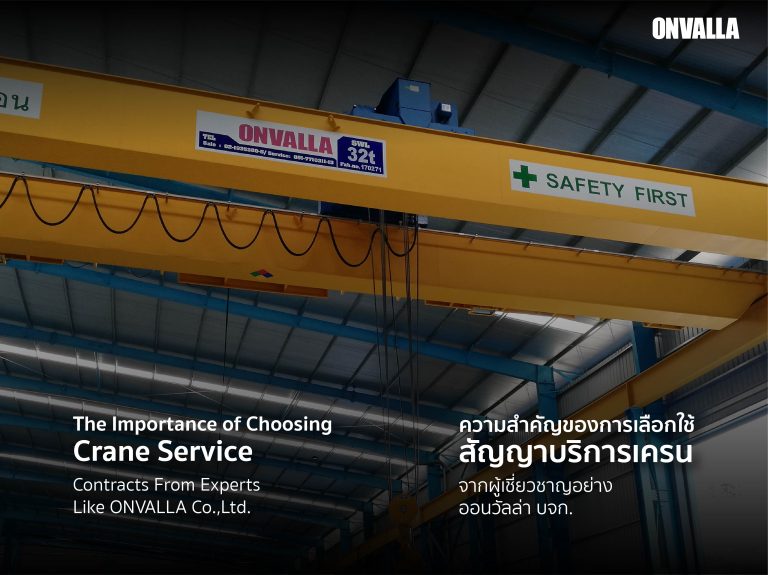
An overhead crane (also called an EOT or bridge crane) runs on rails fixed to the building structure and lifts and moves loads above the production floor. ONVALLA Co., Ltd. designs and advises on overhead cranes in single-girder, double-girder and underhung configurations to suit each customer’s application.
Which Overhead Crane Configuration Fits Your Plant?
Single-Girder Overhead Crane
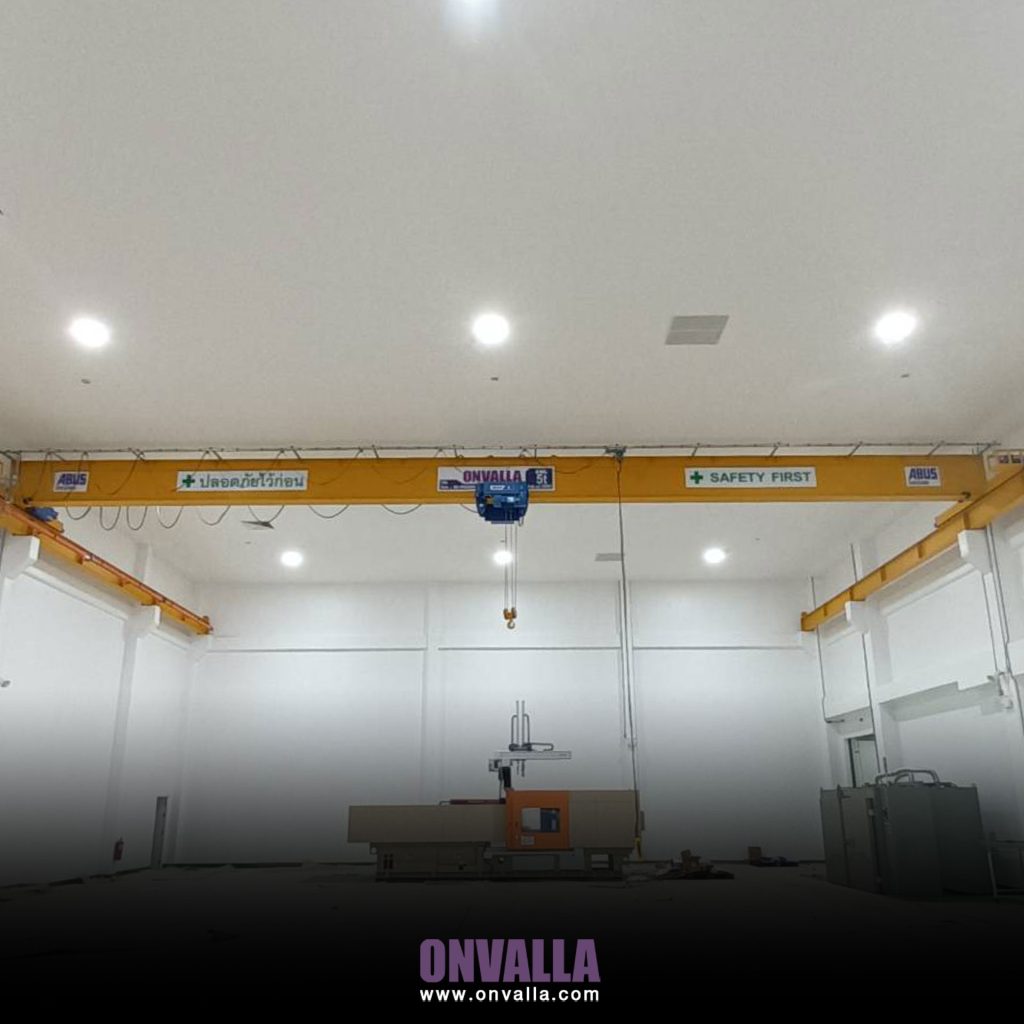
Widely used in factories large and small for loads that are not very heavy. Typical capacity is 0.5–20 tons with spans of 4–40 metres; lifting height is set by the customer’s needs. It suits small to medium plants and offers fast, efficient operation.
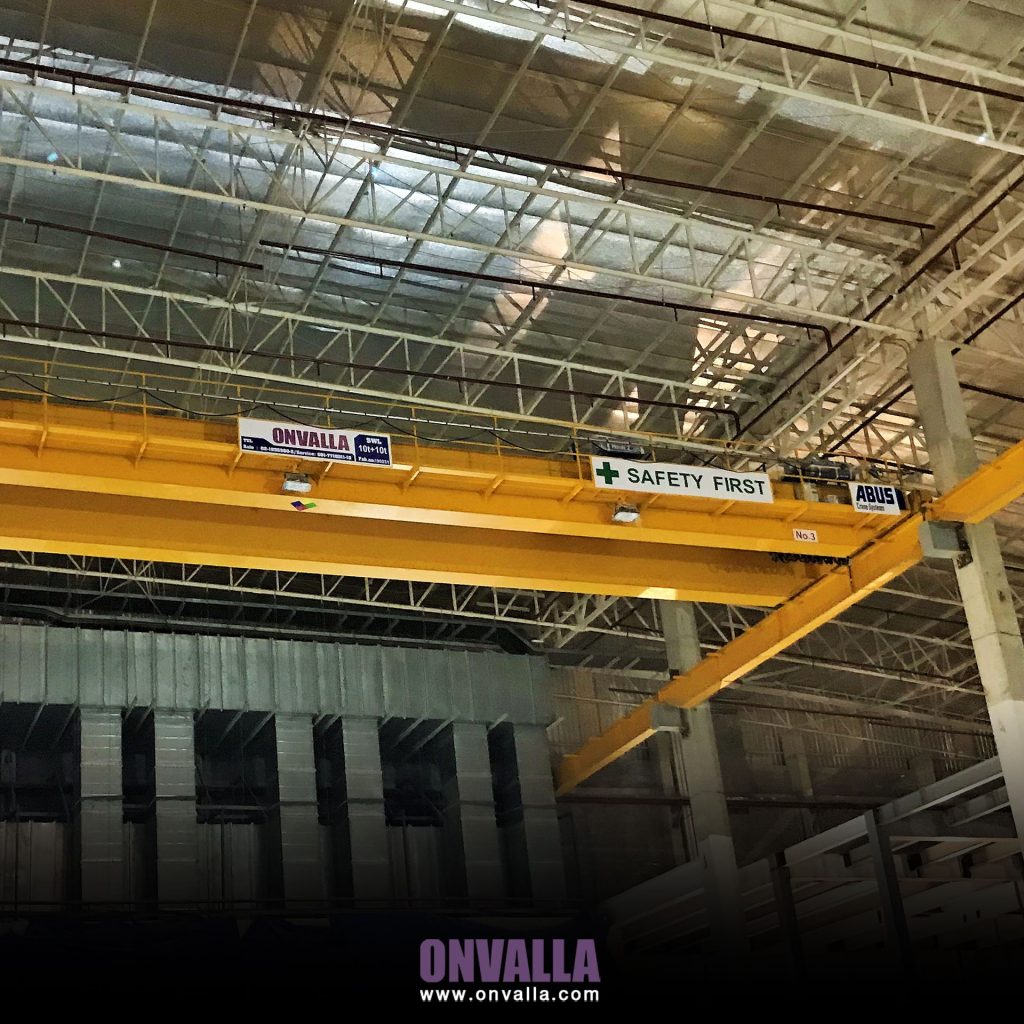
Double-Girder Overhead Crane
Used mostly in heavy industry, such as steel coil warehouses, automotive parts assembly plants and power plants. Heavy loads require a second girder. Typical capacity is 2–500 tons with spans of 10–50 metres; lifting height depends on site limits and the customer’s needs. It is chosen for heavy, continuous duty and offers greater durability and reliability than a single-girder crane. ONVALLA’s team calculates the structure for each customer, with operator safety as the first priority.
Underhung Overhead Crane
The crane runs underneath the runway, with its end carriages suspended from the runway beams. It can be built as single or double girder and suits buildings that need to use the full floor area and the widest possible working width, such as large aircraft maintenance hangars.
Control Options
| Option | How it works | When to choose it |
|---|---|---|
| Double speed | Two speeds, slow and fast, in the same direction | Straightforward lifting where simple control is enough |
| Inverter | Electronic control for smooth movement | Precise positioning and gentle starts and stops |
The choice of control system depends on the customer’s requirement.
What Does an Overhead Crane Bring to a Factory?
- Less time and labour in lifting and moving goods, so the plant runs more efficiently
- Lower accident risk compared with unsafe manual lifting or loads that twist
- Greater confidence in operations when the crane design matches the application
Frequently Asked Questions
When is a double-girder crane needed instead of a single-girder crane?
When loads are heavy (typically above the 0.5–20 ton single-girder range), spans are long, or the crane runs heavy continuous duty.
Is an overhead crane always the right choice?
No. If the building cannot carry crane loads from above, or the work is outdoors, a gantry crane may suit better. Compare them in Overhead vs. Gantry Crane.
Which hoist brands does ONVALLA use?
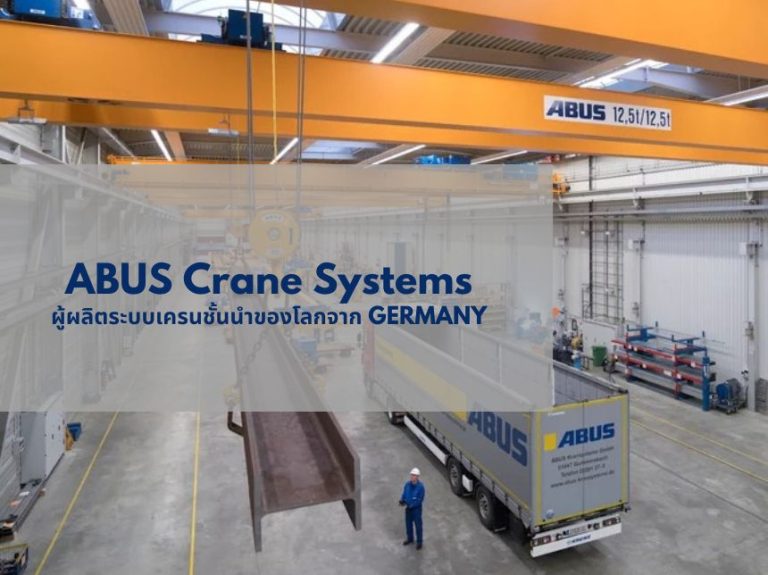
ONVALLA is an ABUS distributor. See the ABUS hoist range and our crane page.
ONVALLA’s engineers can recommend and design the most suitable overhead crane for your operation. Request a quotation.