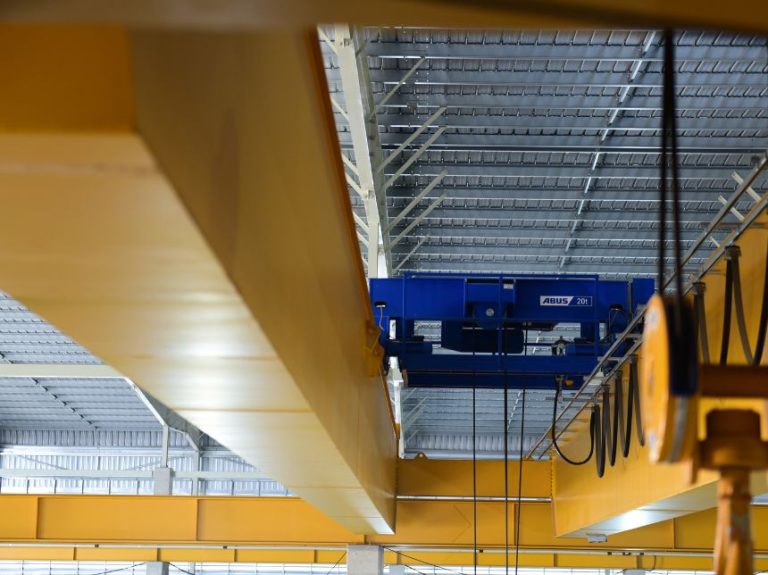
Basic crane care rests on four habits: inspect the crane every day before use, measure and record wear on fast-wearing parts, keep it lubricated at least once a week, and repair or replace any damaged part straight away, however small. Cranes lift heavy loads in every cycle, so they wear faster than most machines, and poor care raises the risk of accidents.
4 Habits of Good Crane Care
1. Inspect the Crane Daily
Before use each day, the operator should carry out a visual inspection, run the functions and listen to how they sound, and test each movement. Any abnormality should be repaired so the crane stays complete and safe.
2. Measure and Record Wear
At set intervals, check and track changes in parts that wear easily, such as wire ropes, chain links, brake linings, crane drive wheels and crane rails.
3. Check and Top Up Lubrication
Crane performance and life depend largely on lubrication. Use the grease and lubricating oil specified in the manufacturer’s manual, apply lubricant at least once a week, and check and top up oil regularly.
4. Repair Damage Immediately
When an inspection finds damage, repair or replace the part, whether the damage is small or large. Running a crane with even slightly damaged mechanical parts shortens its life and can lead to serious losses.
18-Point Crane Component Checklist
| Area | Check |
|---|---|
| Hoist motor | Up/down, slow and fast speed |
| Cross-travel motor | Left/right, slow and fast speed |
| Long-travel motor | Forward/back, slow and fast speed |
| Hoist brake | Works while lifting and lowering |
| Travel brakes | Long-travel and cross-travel brakes work |
| Wheels | Long-travel and cross-travel wheel sets |
| Limit switches | Up/down, left/right and forward/back limits cut out correctly |
| Buffers | End stops and rubber buffers at the ends of both runways |
| Hook | Hook block and safety latch that stops the load slipping off |
| Rope system | Rope sheaves, rope drum, rope guide and wire rope |
| Chain system | Chain sprocket, chain guide, chain and chain bag |
| Warning signals | Warning lights and sounds |
| Protection | Overload cut-out |
| Controls | Wireless remote and wired pendant |
| Electrical system | Long- and cross-travel conductor rails, control panel, cables and fittings |
Why It Pays Off
Keeping a crane in normal, ready-to-use condition extends its life, reduces accidents from unexpected events, and prevents production stoppages caused by breakdowns. For engineering-level maintenance beyond daily care, see crane preventive maintenance.
Frequently Asked Questions
How often should a crane be lubricated?
At least once a week, using the lubricant type specified by the manufacturer, while checking and topping up oil regularly.
Which crane parts wear fastest?
Wire ropes, chain links, brake linings, drive wheels and crane rails should be measured and recorded regularly.
Need help with crane care? ONVALLA offers inspection, repair and service contracts through its after-sale service. Contact us.