ONVALLA works closely with industrial customers by first understanding their operational requirements and site conditions, then designing and delivering suitable crane and hoist solutions. Our services cover consultation, site assessment, solution design, installation, testing, commissioning, and after-sales support.
Industrial lifting requirements vary from one facility to another. Factors such as load capacity, lifting frequency, lifting height, available space, building structure, and production processes can all affect the selection and design of a crane or hoist system.
For this reason, selecting the right lifting equipment is not simply about choosing a product based on standard specifications. It requires an understanding of the application, site conditions, operational requirements, and the customer’s objectives.
How Does ONVALLA Work with Industrial Customers?
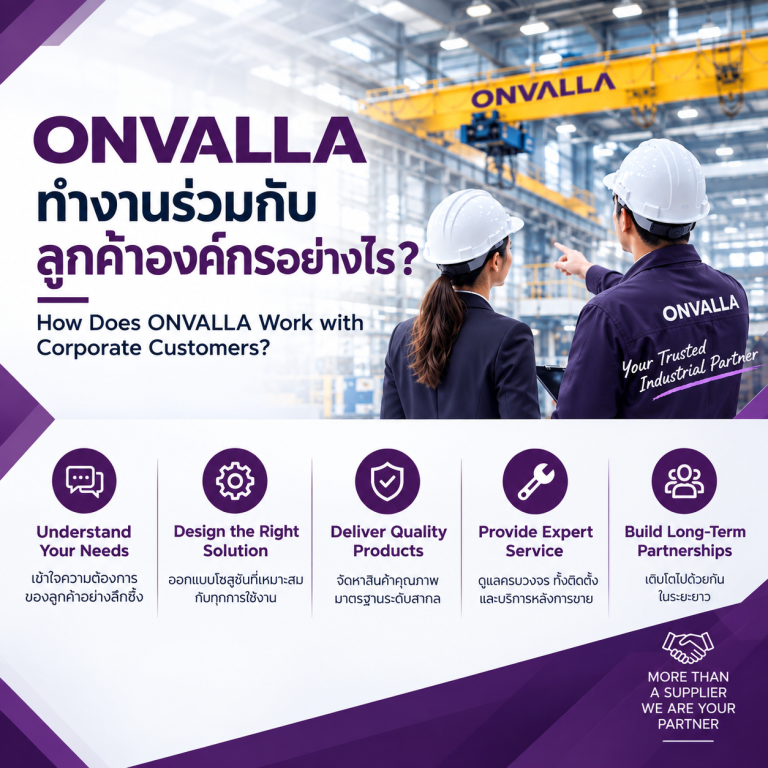
ONVALLA’s approach can be divided into five key stages:
1. Understanding Customer Requirements
Every project begins with a detailed discussion to understand the customer’s requirements, both technical and operational.
Key considerations may include:
- What materials need to be lifted or moved?
- What is the maximum lifting capacity?
- How frequently will the equipment be used?
- What lifting height is required?
- What is the available installation space?
- Are there existing building structures or crane systems to consider?
- Are there specific safety or technical requirements?
ONVALLA works with relevant stakeholders within the customer’s organization, including engineering, production, maintenance, and procurement teams, to gain a comprehensive understanding of the project.
2. Site Assessment and Analysis
After understanding the initial requirements, ONVALLA evaluates the actual site conditions. Site assessment is particularly important for crane and hoist installation projects in industrial facilities.
Key factors may include:
- Installation area and available space
- Building and supporting structures
- Load capacity and lifting requirements
- Crane span and travelling distance
- Lifting height
- Crane operating conditions
- Working environment
- Installation and maintenance limitations
Site information helps ensure that the proposed crane or hoist system is aligned with the actual operating environment.
3. Solution Design and Proposal
Once the customer requirements and site conditions have been established, ONVALLA analyzes the information to develop a suitable solution.
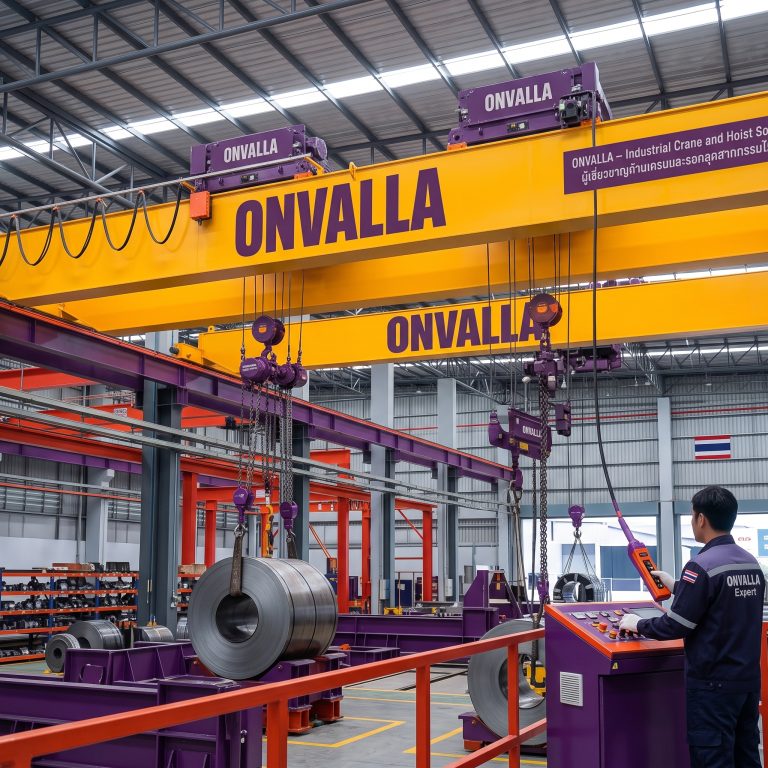
Our solutions may include both Crane Solutions and Hoist Solutions, with equipment selected according to the required load capacity, operating frequency, application, and site conditions.
For projects with specific requirements or site limitations, ONVALLA works closely with customers to develop and adjust the system according to the project’s objectives and operational needs.
4. Installation, Testing, and Commissioning
After the solution has been approved, ONVALLA proceeds with the project according to the agreed plan, covering installation, inspection, testing, and commissioning.
These steps help verify that the crane and hoist system operates according to the project requirements before it is handed over to the customer.
5. After-Sales Service and Ongoing Support
ONVALLA’s relationship with customers does not end after project delivery.
We provide after-sales services for crane and hoist systems, including:
- Crane inspection and maintenance
- Preventive Maintenance (PM)
- Equipment and system inspection
- Load Test
- Repair and spare parts support
- Technical consultation
- System improvement or expansion support
Ongoing maintenance and technical support help customers maintain reliable operations and plan for future system requirements.
Why Is Collaboration Important for Industrial Crane Projects?
Every industrial crane project has different requirements. Selecting equipment based only on standard specifications may not be sufficient because system performance depends on the relationship between the equipment, application, and actual site conditions.
Early collaboration between ONVALLA and the customer helps to:
- Understand actual operational requirements
- Select suitable lifting equipment
- Identify site limitations at an early stage
- Reduce the risk of misunderstandings
- Plan installation and project delivery systematically
- Prepare for future maintenance and system expansion
What Types of Industrial Customers Does ONVALLA Support?
ONVALLA provides crane and hoist solutions for a wide range of industrial applications. Our services can support customers requiring new crane systems, system improvements, equipment replacement, maintenance, and after-sales services.
Each project is evaluated based on its specific requirements, with the solution developed around the customer’s actual application and operating environment.
Frequently Asked Questions About Working with ONVALLA
Does ONVALLA design crane systems based on actual site conditions?
Yes. ONVALLA considers the customer’s application requirements, project specifications, and actual site conditions when developing crane and hoist solutions.
Is a site survey required before installing an industrial crane?
A site survey is an important part of an industrial crane installation project. It allows the project team to evaluate factors such as available space, building structure, crane span, lifting height, load requirements, and installation limitations.
Does ONVALLA provide after-sales service?
Yes. ONVALLA provides after-sales services for crane and hoist systems, including inspection, Preventive Maintenance (PM), Load Test, repair, spare parts support, and technical consultation.
Does ONVALLA only sell cranes and hoists?
No. ONVALLA’s services extend beyond equipment supply. Depending on the project, our work can cover requirement analysis, site assessment, solution design, installation, testing, commissioning, and after-sales support.
ONVALLA: Your Partner for Industrial Lifting Solutions
ONVALLA focuses on understanding, collaboration, and continuous support throughout the project lifecycle — from identifying customer requirements and assessing site conditions to delivering the solution and providing after-sales service.
Because the right industrial lifting solution does not begin with choosing a product. It begins with understanding what the customer needs the system to accomplish.