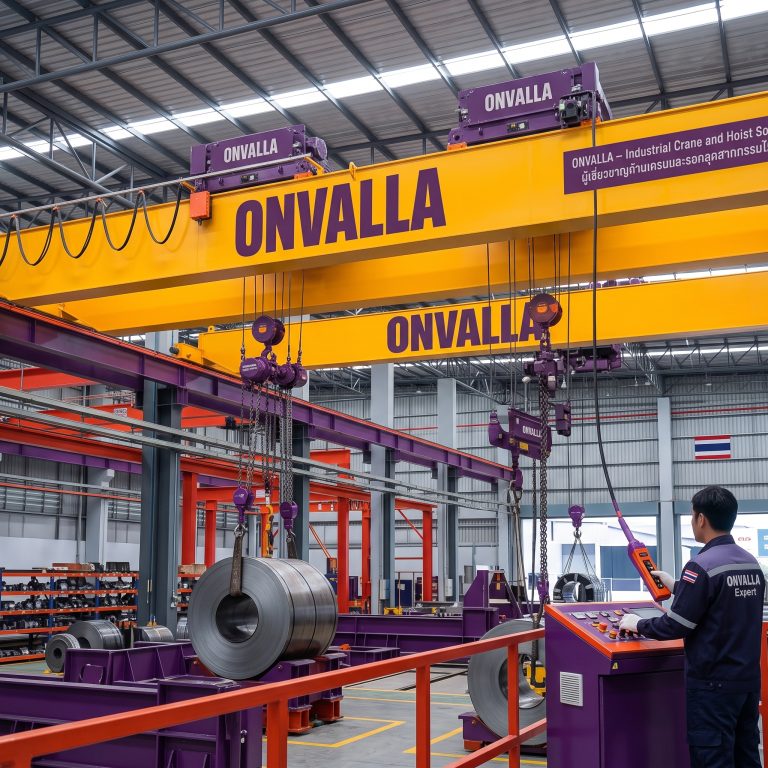
Turning an engineering design into a working industrial crane requires a structured process covering engineering design, equipment production or supply, installation, inspection, system adjustment, and testing before handover. Each stage must work together to ensure that the completed crane meets project requirements and performs appropriately under actual site conditions.
For ONVALLA, project success is not defined by the engineering drawings alone. It is about ensuring that the designed solution can be properly installed, tested, and operated in the real working environment.
What Are the Main Steps in Industrial Crane Installation?
The process from engineering design to an operational crane can generally be divided into five key stages:
- Site survey and data collection
- Engineering design and technical drawings
- Equipment production or supply
- Installation and on-site adjustment
- Testing, inspection, and handover
Each stage is connected, with information from one stage being used to support the next.
1. From Site Information to Engineering Design
After assessing the site and understanding the customer’s requirements, the engineering team develops the collected information into technical drawings and specifications for the project.
Engineering design may cover key details such as:
- Crane structure and components
- Load Capacity
- Span and travelling distance
- Lifting height
- Drive systems
- Electrical and control systems
- Safety systems
- Installation requirements
The design must consider both engineering requirements and actual site conditions to ensure that the solution can be practically manufactured and installed.
2. Reviewing the Design Before Production and Installation
Before production or equipment procurement begins, the engineering details should be reviewed against the project’s requirements.
This review helps reduce potential issues such as:
- Equipment dimensions not matching the installation area
- Insufficient or incorrect lifting capacity
- Unsuitable installation positions
- Electrical or control systems not matching the application
- Differences between the engineering drawings and the equipment to be installed
Reviewing these details at an early stage helps reduce the risk of problems during production and installation.
3. From Engineering Drawings to On-Site Installation
Once the equipment is ready, the installation team proceeds according to the engineering drawings and project requirements.
However, actual site conditions may reveal details that were not fully visible during the design stage, such as space limitations, structural positions, or specific environmental conditions.
The installation team therefore needs to assess actual conditions and make necessary adjustments while maintaining the original engineering principles and applicable safety requirements.
On-site adjustment does not mean changing the design without engineering consideration. It means resolving practical site conditions within the technical and safety requirements of the system.
4. Adjusting the System for Actual Operation
After installation, the system is inspected and adjusted according to the customer’s actual operating requirements.
Items that may be checked or adjusted include:
- Lifting speed
- Travelling speed
- Travel distance
- Stopping positions
- Control systems
- Safety devices
This process helps ensure that the crane operates appropriately within the customer’s actual workflow.
5. Testing Before Handover
Before the crane is handed over to the customer, the system undergoes inspection and testing according to the project requirements.
One important step is the Load Test, which is used to verify system performance and lifting capability under specified test conditions.
Other system components may also be checked, including:
- Lifting system
- Travelling system
- Control system
- Safety devices
- Overall crane operation
The inspection and testing process helps verify that the system is ready for operation before handover.
Why Is Process Control from Design to Installation Important?
Industrial cranes consist of multiple interconnected systems, including the crane structure, lifting equipment, electrical systems, control systems, and safety devices.
If information is not properly coordinated between Design → Production → Installation → Testing, it can affect system performance during actual operation.
Maintaining control throughout the process helps ensure that:
- Engineering information is correctly implemented
- Equipment matches the approved design
- Installation follows project requirements
- Potential issues are identified before handover
- The completed system is inspected before actual operation
How Does ONVALLA Manage Industrial Crane Projects?
ONVALLA focuses on connecting Engineering, Installation, and Testing to ensure that the designed solution can be effectively implemented in the real working environment.
Our project approach can cover:
Site Survey → Engineering Design → Equipment → Installation → Testing → Handover
Each stage is designed to align the crane system with the customer’s requirements and actual site conditions.
Frequently Asked Questions About Industrial Crane Installation
Can a crane be installed immediately after the design is completed?
Typically, the engineering details, equipment, installation plan, and site readiness should be reviewed and prepared before actual installation begins.
Why does a crane need adjustment after installation?
Actual operating conditions may require specific adjustments to factors such as lifting speed, travelling distance, stopping positions, and control settings. Adjustment helps align the system with the customer’s actual application.
What is a Load Test for an industrial crane?
A Load Test is a test performed under specified conditions to verify the crane system’s lifting performance and load-handling capability before operation or handover.
Does ONVALLA provide crane installation and testing services?
ONVALLA provides Crane Solutions and Hoist Solutions, with services that can include site assessment, engineering design, installation, testing, commissioning, and after-sales support depending on the project requirements.
From Engineering Design to a Working Industrial Solution
For ONVALLA, an engineering drawing is only the beginning of the project. The key is connecting design, installation, system adjustment, and testing to deliver a crane system that works effectively in the actual operating environment.
Because a well-designed crane is not defined only by a correct drawing—it must also perform as intended in the real world.