Businesses where cars stay for hours, such as offices, factories, condominiums and hotels, should choose AC chargers (Type 2) because the cost per point is low and many points can be installed. Businesses with short stops, such as fuel stations, roadside stores and delivery fleets, should choose DC fast chargers (CCS2).
Key Takeaways
- Choose AC or DC by parking time, not by the charger’s maximum power.
- AC charging speed is limited by the vehicle’s on-board charger.
- Check the transformer and main distribution board before buying, and use load management when several chargers run together.
AC Charger vs. DC Fast Charger
| Aspect | AC charger | DC fast charger |
|---|---|---|
| Common connector in Thailand | Type 2 | CCS2 |
| Typical power | 7.4–22 kW, limited by the on-board charger | Tens to hundreds of kW |
| Charging time | Several hours | About half an hour to one hour, depending on car and battery |
| Cost per point | Lower | Much higher, including electrical work |
| Best for | Staff, residents, hotel guests | Company cars, fleets, short-stop customers |
Which Setup Fits Your Business?
| Business | Suitable setup |
|---|---|
| Factories and offices | Several AC points in staff parking plus 1 DC point for company cars |
| Condominiums and housing estates | AC with per-user billing and load management |
| Hotels and resorts | AC for overnight guests |
| Retail and shopping centres | AC for 1–3 hour visits plus DC for quick stops |
| Fuel stations, roadside stores, fleets | DC fast chargers |
5 Steps to Plan Business EV Charging
- Assess users: number of EVs today and in 3–5 years, and average parking time.
- Check the transformer and MDB: is the spare capacity enough, or must supply be upgraded?
- Choose load management: share power so total demand stays within the limit.
- Choose payment and app: for condominiums or public service, such as OCPP, RFID and QR.
- Combine with rooftop solar: charge with solar power in the daytime. See is factory solar worth it.
How Does Load Management Help? An Example
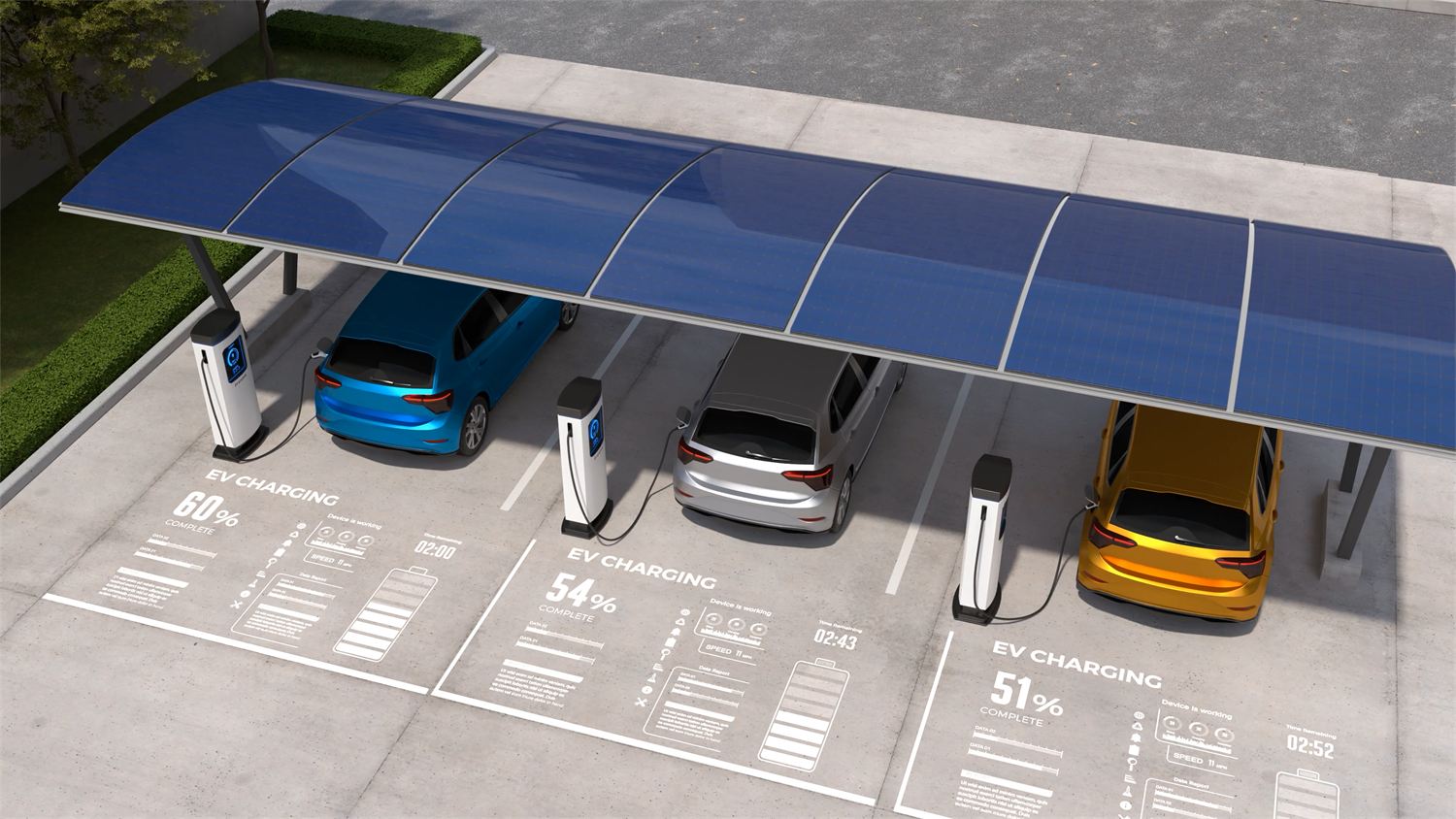
A car park has ten 22 kW AC chargers. At full power together they would draw 220 kW. If the building has only 100 kW to spare, load management caps the total at 100 kW and shares it between cars, so the transformer need not be upgraded straight away. This suits offices and factories where cars stay all day. Figures are illustrative and must be designed for the real electrical system.
Safety and Permits
- Choose chargers with complete protection, see protection systems an EV charger should have
- Have an electrical engineer size cables, breakers and earthing to standard
- Check meter size, transformer and supply conditions with MEA or PEA before starting
Frequently Asked Questions
Do I need permission from the electricity authority to install EV chargers in Thailand?
Always check with MEA or PEA first, because a larger meter or transformer may be needed for the installed power, and public stations may have further requirements.
Do all EVs use the same connector?
Most EVs sold in Thailand use Type 2 for AC and CCS2 for DC. Check your users’ models first. See charging levels, connectors and cables.
Is a 22 kW AC charger always faster than 7 kW?
No. The real speed is limited by each car’s on-board charger.
How many chargers should a business install?
Start from the number of EVs parked at peak time plus your 3–5 year plan, and leave spare conduit and panel space so chargers can be added without new civil work.
Plan EV Charging With Limitless Energy
The Limitless Energy by ONVALLA team can survey your electrical system and design charging points for your business. See the EV charger page and our projects: charging station at a bank office and 180 kW DC charging.