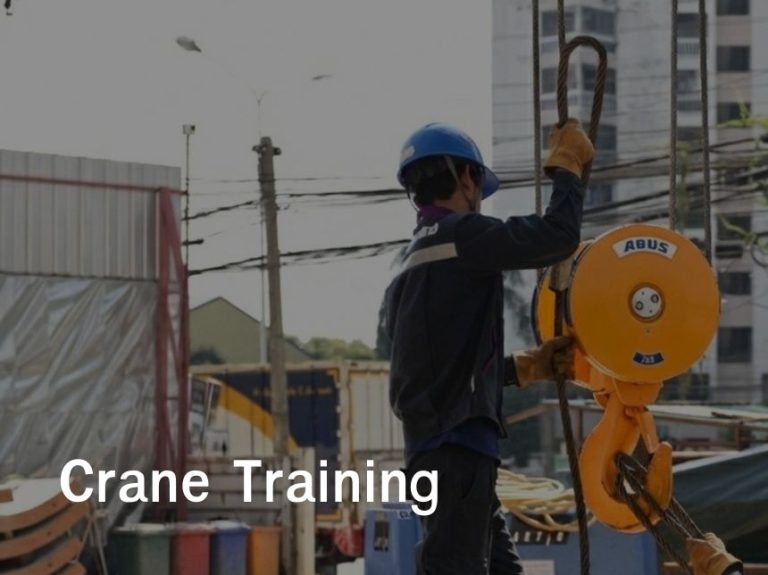
An ABUS electric wire rope hoist lifts loads with steel wire rope wound on a drum. Made by ABUS Kransysteme in Germany for safe working loads from 1 to 120 t, it suits heavy, high and continuous lifting in factories. Choose the model by load, hook path, speed, FEM/ISO duty class and site environment.
Key Takeaways
- ABUS offers seven wire rope hoist designs, from monorail hoists to twin barrel crab units, covering 1 to 120 t.
- Rated load tells you whether the hoist can lift the job. Duty class tells you how long it will last doing it.
- In Thailand, hoists rated 1 t or more must be tested at least once a year under the 2021 Ministerial Regulation.
How Does an Electric Wire Rope Hoist Work?
An electric motor turns the drum through a gearbox. The rope winds into grooves on the drum to raise the hook and unwinds to lower it. When power is lost or the button is released, the electromagnetic brake engages at once and holds the load.
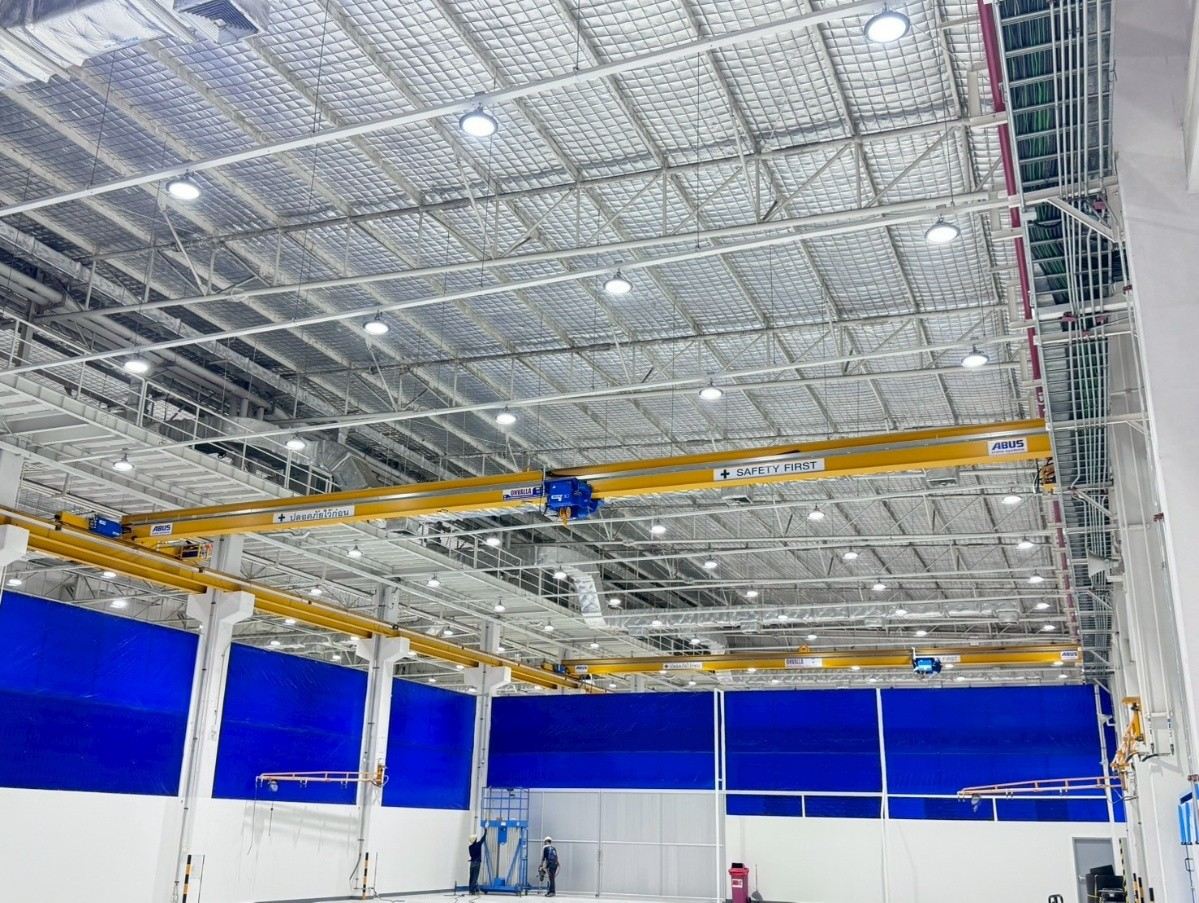
Wire rope hoists are usually installed on overhead cranes, gantry cranes or monorails so the load can move both vertically and horizontally.
Why Do Factories Choose ABUS Wire Rope Hoists?
- Engineered and built in Germany: ABUS wire rope hoists are produced in Gummersbach and classified to FEM/ISO groups.
- Smooth control: inverter versions give stepless speed, which reduces load swing and brake wear.
- One brand for the whole plant: wire rope hoists, chain hoists, overhead cranes, jib cranes and the HB light crane system.
- Local support: ONVALLA is an ABUS distributor in Thailand and handles design, installation, testing, maintenance and genuine parts.
Which ABUS Wire Rope Hoist Types Are Available?
| Type | Safe working load | Design and typical use |
|---|---|---|
| Type E | 1–16 t | Compact monorail hoist for single girder cranes and monorails |
| Type U | 6.3–25 t | Twin trolley monorail hoist for long hook paths or high-capacity single girder cranes |
| Type S | 1–10 t | Side-mounted hoist that raises the hook position where headroom is limited |
| Type D | Up to 63 t | Standard crab unit for double girder cranes |
| Type DA | Up to 40 t | Low headroom crab unit for limited space above the crane |
| Type DQA | Up to 40 t | Ultra low headroom crab unit for very tight space above the crane |
| Type Z | Up to 120 t | Twin barrel crab unit for the heaviest ABUS loads |
Ranges follow the product data on our ABUS hoist page. The final design value depends on hook path, speed, rope reeving and duty class.
5 Steps to Choose the Right Wire Rope Hoist
- Set the rated load (SWL): take the heaviest load including slings and spreader beams, then allow for growth.
- Measure the height of lift: the distance from the lowest to the highest hook position sets drum and rope length.
- Choose the duty class: estimate running hours per day and how often you lift near full load. See the FEM and ISO duty class guide.
- Define the speed: mould handling and assembly need two-speed or inverter control.
- Check the environment: heat, humidity, dust and outdoor use affect the IP rating. Hazardous areas need an explosion-proof hoist; see STAHL at alla.co.th.
Which Industries Use ABUS Wire Rope Hoists?
| Industry | Common lifts | What to watch |
|---|---|---|
| Metal and structural steel | Beams, plate, coils | Frequent use needs a high duty class |
| Moulds and automotive parts | Die changes on presses | Low speed and precise positioning |
| Warehousing and logistics | Pallets and rolls | Long spans |
| Power plants and pump stations | Maintenance of large machines | Rare use but high reliability; see power plant crane standards |
Frequently Asked Questions
Where are ABUS wire rope hoists made?
They are made by ABUS Kransysteme GmbH in Germany and are supplied and serviced in Thailand by ONVALLA.
What is the difference between a wire rope hoist and a chain hoist?
A wire rope hoist suits heavy, high and continuous lifting. A chain hoist suits light to medium loads, limited space and a lower initial budget. See the chain hoist vs. wire rope hoist comparison.
How often must a wire rope hoist be inspected in Thailand?
Hoists rated 1 t or more must be tested at least once a year under the 2021 Ministerial Regulation. If the hoist is part of a crane, the Por Jor 1 form sets intervals for industrial use: yearly for 1–3 t, every 6 months above 3 t up to 50 t, and every 3 months above 50 t. See Thai crane inspection law. Check rope, hook and brake daily before use.
How long is the delivery time?
It depends on the model, capacity and stock at the time. ONVALLA states the delivery time in each project quotation.
Ask ONVALLA Engineers to Select Your ABUS Model
Send the rated load, hook path, building span and working cycle, and our engineers will help match the model to your site. Related reading: European vs. Asian hoists and choosing the right ABUS hoist.