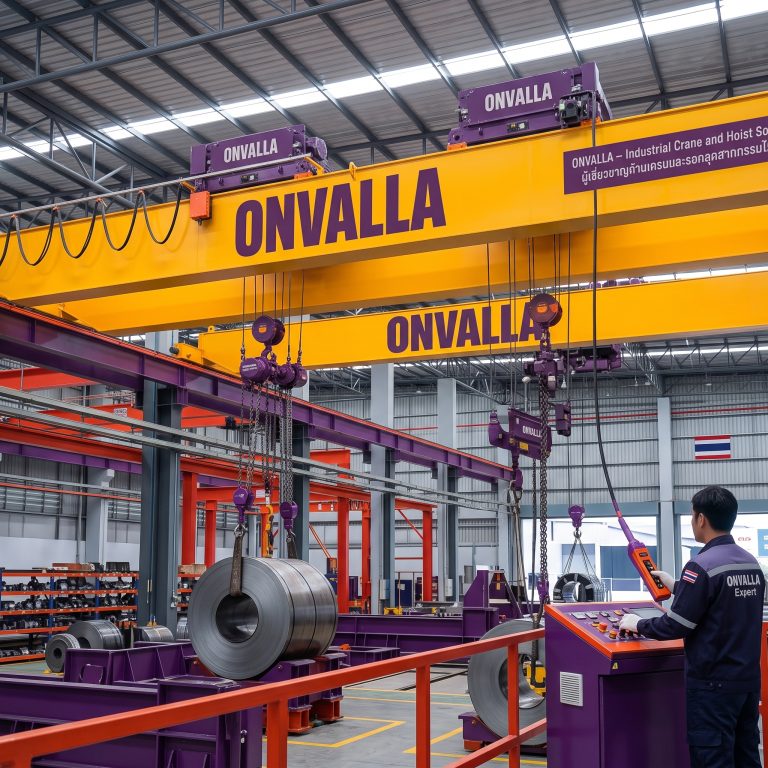
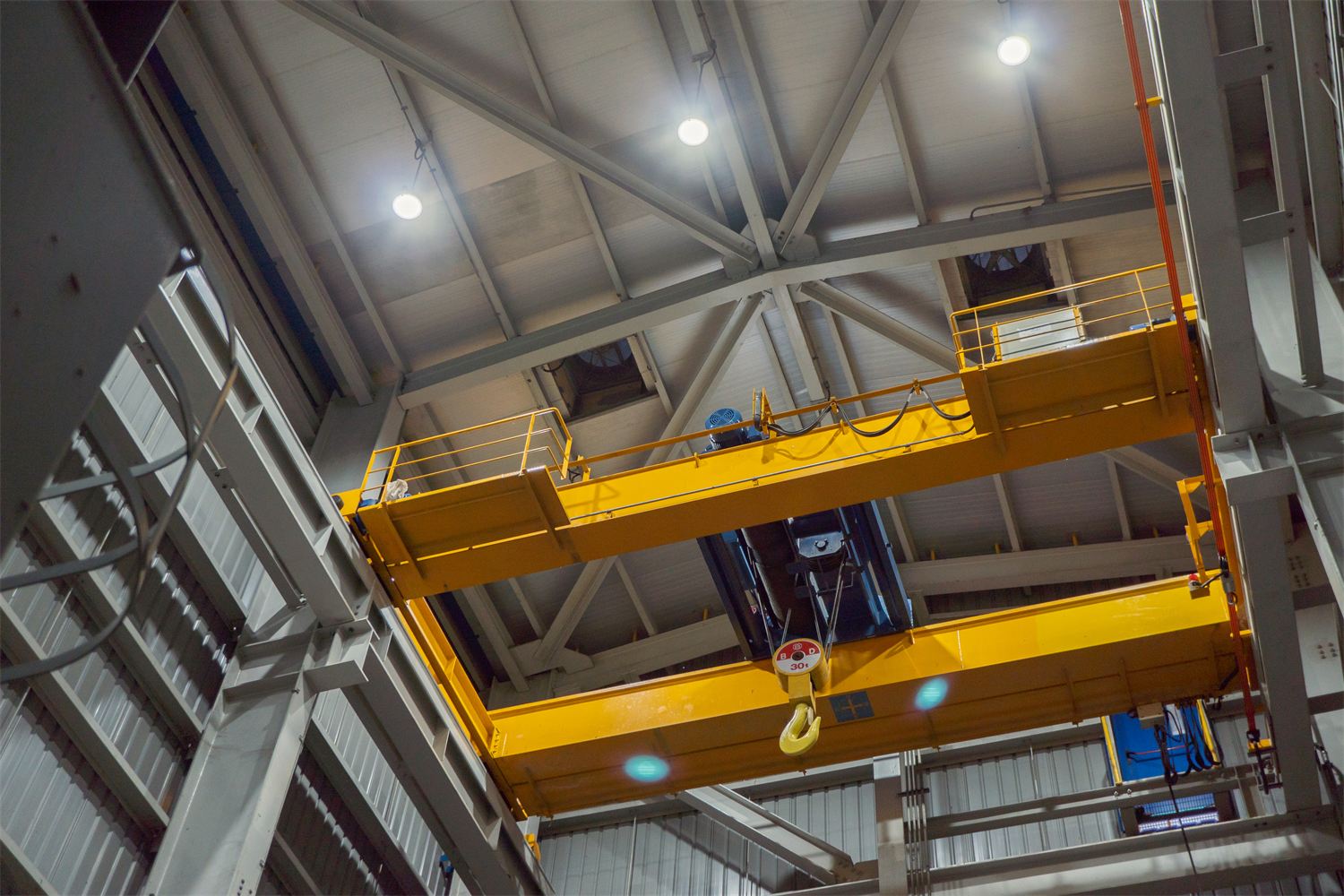
A single girder crane has one main girder with the hoist running underneath it; it is lighter, costs less and suits light to medium work. A double girder crane has two girders with the hoist running on top; it carries heavier loads, lifts higher and handles continuous heavy duty better.
Key Takeaways
- Single girder cranes typically cover 0.5–20 t. Double girder cranes start at about 2 t and go up to very heavy duty.
- Double girder cranes win on hook height and maintenance walkways, but they put more load on the building.
- The ranges overlap, so span, headroom and duty class matter as much as capacity.
What Is the Difference Between Single and Double Girder Cranes?
| Aspect | Single girder | Double girder |
|---|---|---|
| Hoist position | Runs under the girder flange | Runs on rails on top of both girders |
| Typical capacity | 0.5–20 t | 2–500 t |
| Typical span | 4–40 m | 10–50 m |
| Hook height | Loses some height below the girder | Hook travels closer to the roof |
| Load on the building | Lower | Higher; columns and runway must be checked |
| Budget | Lower for crane and installation | Higher, but pays off in heavy long-term use |
| Maintenance | Fewer parts, simple | Walkways on the girder give easy hoist access |
These are typical figures from ONVALLA’s overhead crane data, not hard limits. A twin trolley hoist, for example, lets some single girder cranes reach 25 t. See the ABUS wire rope hoist types.
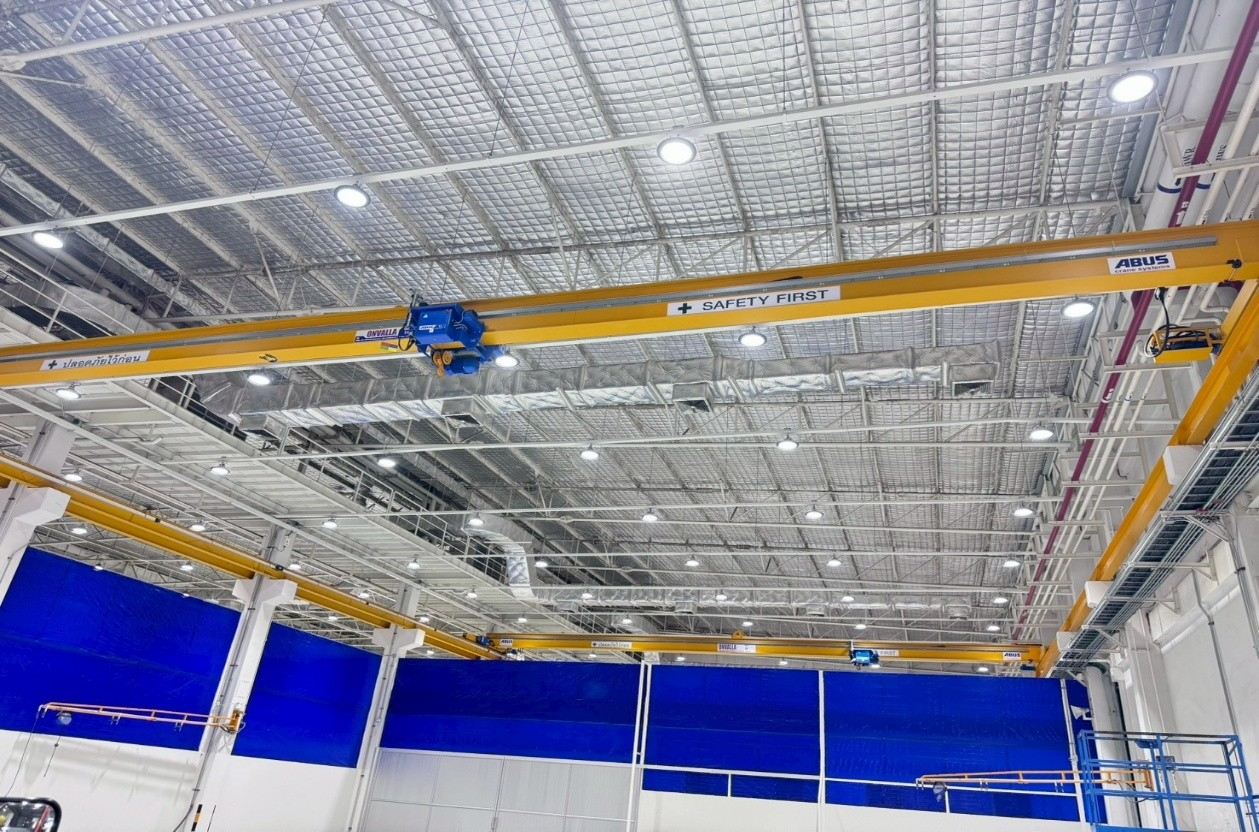
When Should You Choose a Single Girder Crane?
- Most loads are moderate and rarely at full capacity
- The existing building has limited load-bearing reserve
- You need fast installation and budget control, for example general work with EGON hoists
When Should You Choose a Double Girder Crane?
- High capacity or long building span
- A low roof where every centimetre of hook height counts
- Several shifts a day, or accessories such as two hoists or a maintenance walkway
A Quick Decision in 4 Questions
- Is the load above 20 t? If so, start with a double girder design.
- Is headroom tight? If so, compare a double girder crane with a single girder crane using a side-mounted hoist.
- Do you run several shifts or lift near full load often? If so, calculate the duty class before choosing the girder type.
- How much extra load can the building carry? Have an engineer check columns, runway beams and foundations first.
What Should You Prepare Before Requesting a Quotation?
- Maximum rated load (t)
- Span between crane rails and runway length (m)
- Height from floor to the underside of the roof structure
- Lifts per hour and working hours per day
- Building structure drawings, or photos of columns and beams
See what drives the budget in what determines factory crane price.
Frequently Asked Questions
How many tons can a single girder crane lift?
Typically 0.5–20 t, depending on span, duty class and hoist model. Some short-span projects can be designed higher, calculated case by case by an engineer.
Can a crane be installed in an existing building?
Yes, if an engineer confirms that the columns, runway beams and foundations can carry the load. If not, a gantry crane or free-standing runway may be used. See overhead vs. gantry crane.
Is a double girder crane worth the higher price?
It is worth it for heavy loads, frequent use or maximum hook height, because it is built for continuous work and reduces downtime. For light, occasional work a single girder crane is usually the better value.
Compare Both Designs With Our Engineers
ONVALLA surveys the site and can propose single and double girder options based on your building. See our 40 t ABUS double girder project and the crane page.